
When to Replace Gutters in Minneapolis: The Honest Signal List (2026)
The “when to replace gutters” question doesn’t have a calendar answer. Age matters, but it’s not the only variable — Minnesota winters, heavy tree canopy, ice-dam history, and previous maintenance all shift the timeline by years in either direction. A well-maintained .032 aluminum seamless system on a lot with no mature trees can run 25+ years. The same system under oak canopy without regular cleaning, on a north-facing ice-dam-prone elevation, is end-of-life at 13–15 years. The honest signal list — the specific patterns that tell you replacement is due — matters more than the average lifespan number.
This guide is the 2026 Minneapolis-specific signal list for when to replace gutters: the visual and functional cues that tell you repair is no longer enough, the repair-vs-replace economics at different system ages, and how to time replacement with adjacent projects for efficiency. For the broader gutter system context, see the Minneapolis gutters pillar.
The signals: Minneapolis gutters that are telling you it’s time
Nine specific signals that indicate a Minneapolis gutter system is at or past end-of-life:
- Multiple seam leaks (sectional systems). Three or more seams actively leaking despite recent resealing. Sealant life is 5–10 years in our climate; if the whole system has aged past that, individual repairs chase a receding target.
- Sagging runs that have been rehung before. A previously-rehung section sagging again means the fascia, hangers, or gutter profile itself is compromised. The re-rehang won’t hold.
- Visible rust (on steel) or chalky oxidation (on aluminum). Surface-deep rust is cosmetic; rust through the metal is structural. Heavy chalky oxidation on aluminum indicates UV-degraded surface layers — not structurally failed yet but within 2–4 years of failure.
- Pulled, cracked, or missing end caps. End cap failures usually happen with ice loading and indicate the system is under stress it wasn’t designed for. Replacement end caps can be installed, but the underlying ice loading doesn’t go away.
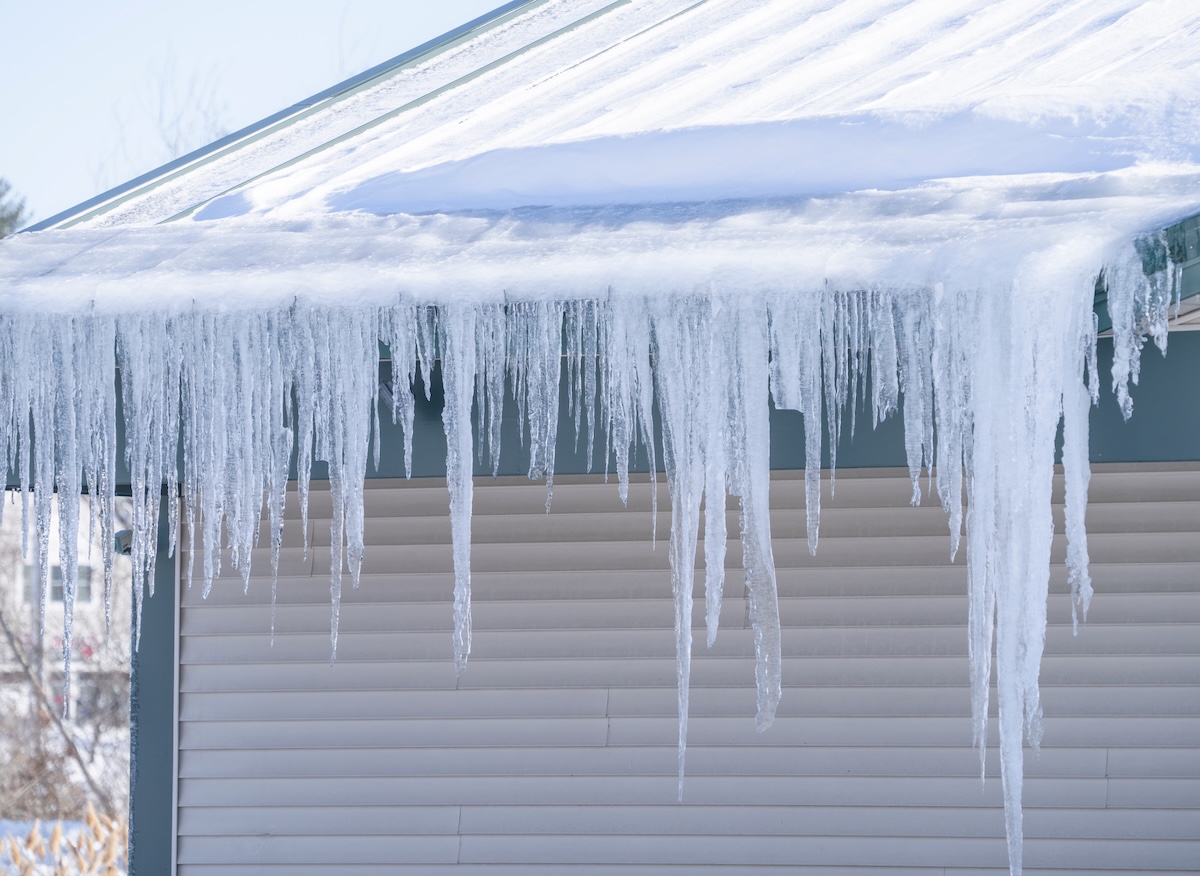
- Recurring ice damage every winter. Ice-damaged gutters that have been straightened and reseated multiple times are telling you to replace with heavier-gauge material and tighter hanger spacing. See gutters and ice dams in Minneapolis.
- Overflow during normal rain events. Overflow during extreme thunderstorms is a capacity issue (and may call for 6-inch upgrade); overflow during normal rain indicates undersized system or severely clogged/damaged gutters. See 5-inch vs 6-inch gutters.
- Visible fascia rot behind or below the gutters. Rot that has progressed past minor repair territory. Replacement of fascia plus gutters is usually more efficient than chasing rot with gutters still in place. See fascia and soffit repair.
- System age 18+ years with any moderate damage. An 18-year-old system with one or two problems is usually within 3–5 years of multiple failures. Replacement at this age is usually better economics than sequential repairs.
- Pulling away from the house. Visible gaps between the back of the gutter and the fascia, or gutter leaning forward instead of flush against the fascia. Usually indicates pulled hangers or rotted fascia. Repair is possible, but if this is widespread, replacement is the better path.
One or two signals on an otherwise sound system usually means repair. Three or more signals, or any combination with an age of 18+ years, usually means replacement. See gutter repair in Minneapolis for the repair-side analysis and gutter replacement in Minneapolis for the replacement process.
Age-based replacement windows for Minneapolis systems
| System type | Typical Minneapolis lifespan | Start planning replacement at | Replace by |
|---|---|---|---|
| Vinyl sectional | 6–10 years | Year 6 | Year 10 |
| .027 aluminum (seamless or sectional) | 12–18 years | Year 13 | Year 18 |
| .032 aluminum seamless | 18–25 years | Year 18 | Year 25 |
| .032 aluminum sectional | 10–14 years | Year 11 | Year 14 |
| Galvanized steel | 20–30 years | Year 20 | Year 30 |
| Galvalume steel | 25–35 years | Year 25 | Year 35 |
| Copper | 50–100+ years | Year 50+ | On failure (rare in residential timeframes) |
| Zinc | 40–80 years | Year 40+ | On failure |
“Start planning” means thinking about budget and timing; actual replacement within the planning window depends on signal presence. A 16-year-old .032 aluminum seamless system showing no signals can run another 5+ years; the same system at year 16 with three signals should be replaced. For material-specific expected lifespans, see gutter materials in Minneapolis. For seamless vs sectional context, seamless vs sectional gutters.
Repair-vs-replace economics at different Minneapolis system ages
The repair vs. replace economic math shifts by system age:
- Years 1–8. Almost all problems are repair territory. The underlying system has 10+ years of expected life, and repair cost is 5–15% of replacement cost. Even 2–3 repairs over this period add up to less than 25% of replacement, so repair is clearly the right economic call.
- Years 9–14. The repair vs. replace zone for most systems. Single repairs are still cheaper than replacement, but multiple repairs over 2–3 years approach replacement cost. Rule of thumb: if cumulative repair cost in a 3-year window exceeds 30% of replacement cost, replacement is the better call.
- Years 15–18. Replacement starts winning the math. New repairs on an aging system have short effective lifespans (3–5 years on a 15-year system). Replacement resets the clock and usually catches the scope of hidden issues (fascia rot, sized-wrong system, ice-dam-loaded sections).
- Years 18+. Replacement is almost always the right call on any significant damage. Exceptions: very specific repairs on otherwise-sound systems (one hanger replaced, one seam resealed), short-hold properties planning sale within 2 years, or premium materials (copper, steel) that are still within their longer lifespan windows.
For the full installation cost context, see gutter installation cost in Minneapolis; for the broader roof economics, the Minneapolis roof replacement cost pillar.
Timing gutter replacement with adjacent Minneapolis projects
Gutter replacement is usually most efficient when bundled with adjacent work:
- Bundle with roof replacement if the roof is within 5 years of end-of-life. The roofers are already working at the eave edge. Drip edge integration and flashing work are cleanest during the combined project. Expected savings: $300–$700 vs. sequential projects. See the Minneapolis roofing materials pillar.
- Bundle with siding replacement. Siding work requires gutter removal anyway. Reinstalling old gutters on fresh siding is false economy. Expected savings: $200–$500 on the gutter project.
- Bundle with fascia or soffit repair. Obvious bundle — the fascia is the gutter mounting surface. Don’t pay for fascia access twice.
- Coordinate with insurance claims. Wind or hail damage to the roof frequently also damages gutters. Minnesota Statute 65A.28 addresses matching; in some cases, the claim covers full gutter replacement even when only a portion is damaged. See the Minneapolis storm damage claim pillar.
- Seasonal timing: avoid January–February. Gutter replacement in mid-winter is possible but more expensive and quality-compromised due to cold-weather sealant issues. Spring through late fall is the cheaper and cleaner replacement window. For urgent winter repair (not replacement), see gutter repair in Minneapolis.
Most Minneapolis homeowners replace gutters 2–4 years later than the signal list would have suggested, and the delay almost always costs more than acting on the signals. Fascia rot progresses; ice damage compounds; the system that could have been replaced for $2,800 when signals first appeared is now $3,400 of gutter work plus $1,200 of fascia repair. The sunk-cost fallacy of ‘we just fixed that gutter last year’ drives the delay. Reset the thinking: the last repair doesn’t change what’s true about the whole system.
— Paraphrased from a 2024 Minnesota Home Builders Association homeowner decision-making briefing
For contractor selection for replacement work, see the Minneapolis roofing companies pillar. For broader roof-repair timing signals, the Minneapolis roof repair pillar. Further reading: the NRCA consumer center, the IBHS home resilience library, and the University of Minnesota Extension home improvement guide.
Frequently Asked Questions
How do I know when my Minneapolis gutters need to be replaced?
Watch for nine specific signals: multiple seam leaks, rehung sections sagging again, visible rust or heavy oxidation, failed end caps, recurring ice damage, overflow during normal rain, visible fascia rot, system age 18+ with moderate damage, or gutters pulling away from the house. Three or more signals typically means replacement is due; one or two on a sound system usually means repair.
How long do gutters last in Minneapolis?
Depends on material: vinyl sectional 6–10 years, .027 aluminum 12–18 years, .032 aluminum seamless 18–25 years, galvanized steel 20–30 years, copper 50–100+ years. Minneapolis climate shortens these ranges relative to milder markets; maintenance, tree canopy, and ice-dam exposure all shift individual systems by years in either direction.
Should I replace gutters during a roof replacement in Minneapolis?
If the gutters are within 5 years of end-of-life, yes. Bundling saves $300–$700 vs. sequential projects, allows cleaner drip edge integration, and avoids paying for eave access twice. If the gutters are fresh and sound, keep them and reinstall after the roof work.
Is it worth replacing a 15-year-old Minneapolis gutter system that still works?
Depends on signals. A 15-year-old .032 aluminum seamless system with no visible problems can run another 5–10 years — keep it. The same system with multiple seam leaks, a sagging section, or early fascia rot is within 2–3 years of multiple failures — plan replacement.
What season is best for gutter replacement in Minneapolis?
Spring through late fall (April through early November). Cold-weather sealant performance in January and February is compromised, and contractor availability is usually worse. Spring (April–May) and fall (September–October) are typical Minneapolis gutter replacement windows for best weather and scheduling.
Looking for a Minneapolis gutter replacement quote when the signals say it’s time?
We’re Minneapolis Roofing Company — a licensed, insured, local crew that handles gutter installation, repair, and replacement across the Minneapolis metro. If you’re looking for a Minneapolis gutter replacement quote when the signals say it’s time, we’d love to be the name you recommend to your neighbor after the work is done.
