
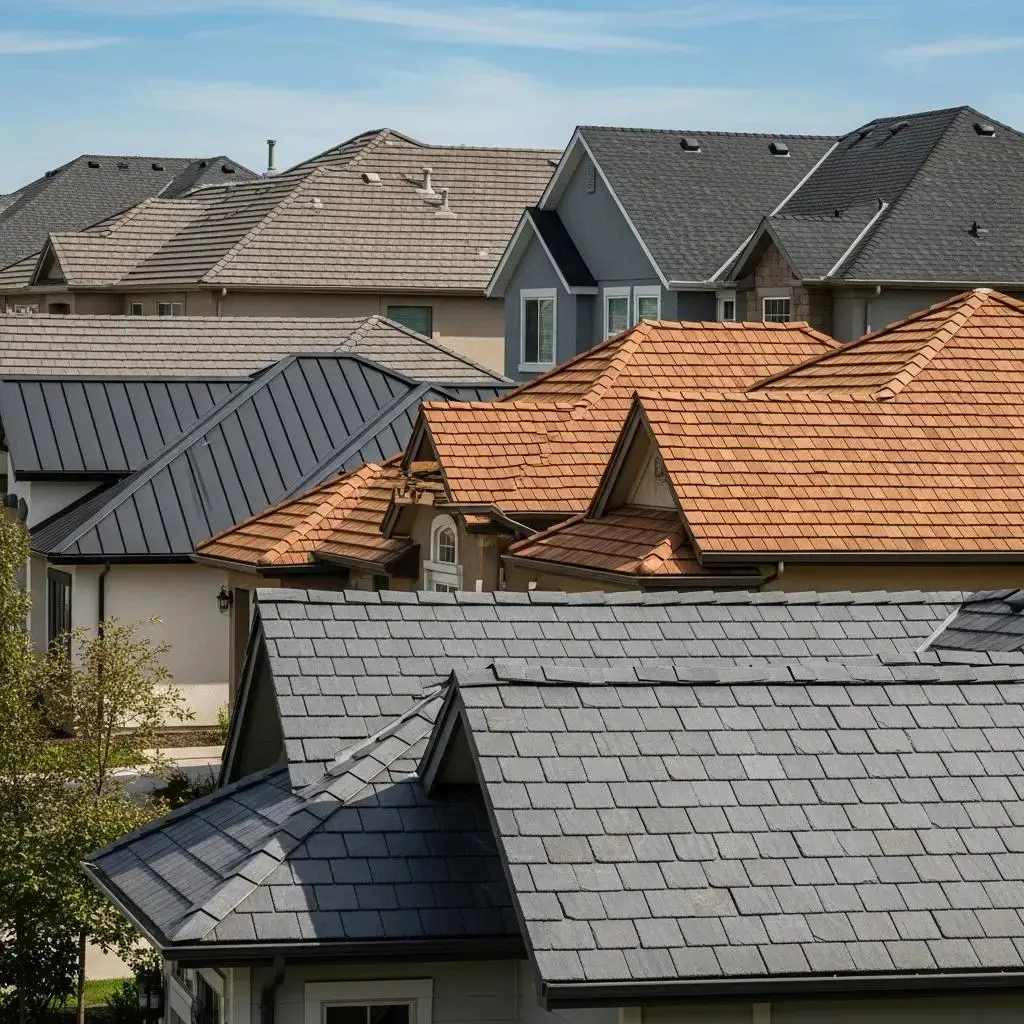
Minneapolis Roofing Materials: The Complete 2026 Comparison Guide
Drive through any Minneapolis neighborhood in April and you’ll see almost every material on the market: 3-tab asphalt on the 1960s ramblers, architectural shingles on the 1990s two-stories, standing seam metal on the lake homes in Edina, synthetic slate on the historic Summit Avenue houses in St. Paul, and the occasional TPO membrane peeking over a flat-roofed modern build in Northeast. The material decision is personal, circumstantial, and has 30-year consequences — so it’s worth getting right.
This pillar guide walks through every residential and light-commercial roofing material used in the Minneapolis metro in 2026: what each one costs, how long it lasts, how it handles hail and ice dams, and the climate-specific quirks that make some materials shine and others struggle in Minnesota. It’s the reference we wish every homeowner had before the estimate meetings started.
Minneapolis roofing materials at a glance: the full comparison
| Material | Typical MN cost / sq ft (2026) | Lifespan | Hail resistance | Best for Minneapolis… |
|---|---|---|---|---|
| 3-tab asphalt shingle | $5.50 – $7.50 | 15–20 yr | Fair | Rental properties, budget replacements |
| Architectural (dimensional) asphalt | $7.00 – $11.00 | 25–30 yr | Good | Most single-family homes |
| Impact-resistant Class 4 asphalt | $9.50 – $13.50 | 25–30 yr | Excellent | Hail-belt ZIPs, insurance discounts |
| Standing seam metal | $15.00 – $24.00 | 40–70 yr | Very good | Upscale homes, cabin properties, long-hold |
| Stone-coated metal | $12.50 – $18.00 | 40–50 yr | Very good | Architectural styling with metal durability |
| Synthetic slate / composite | $13.00 – $20.00 | 40–50 yr | Very good | Historic homes, aesthetic-first budgets |
| Natural slate | $25.00 – $45.00 | 75–100 yr | Excellent | Legacy historic homes, extreme-budget |
| Clay / concrete tile | $18.00 – $30.00 | 40–60 yr | Fair | Rare in MN — niche aesthetic builds |
| TPO membrane (flat) | $8.00 – $13.00 | 20–30 yr | Good | Flat-roofed homes, additions |
| EPDM (rubber) | $7.00 – $11.00 | 20–30 yr | Good | Flat sections, garages, sheds |
| Cedar shake | $12.00 – $18.00 | 20–30 yr | Fair | Rare in MN — declining due to code |
The costs are all-in installed, on a typical Minneapolis 2,500 sq ft home with 25 squares of roof. Simple single-story rectangles are at the low end; complex multi-gable roofs with steep pitches are at the high end. For detailed pricing breakdowns on asphalt specifically, see our Minneapolis roof replacement cost pillar.
How Minnesota climate shapes roofing material choice
Minneapolis gets thrown more weather per year than almost any other major US metro: hail season in summer, ice dams in winter, wide temperature swings in spring and fall, and UV exposure on south-facing slopes that degrades asphalt faster than most homeowners expect. Each material handles these stressors differently:
- Hail resistance. Impact-resistant (Class 4) asphalt, stone-coated metal, and standing seam metal handle hail best. Regular 3-tab and clay tile are the most hail-vulnerable common materials. See our impact-resistant Class 4 shingles in Minneapolis guide.
- Ice dam tolerance. Any material is fine if ice-and-water shield is installed properly at the eaves (Minnesota code requires 24” past the interior wall). Metal roofs shed snow more effectively, reducing ice dam formation but shifting the snow-load problem to the gutters and landscaping below.
- Thermal cycling. Minneapolis sees 100+ degree swings across a year. Rigid materials (clay tile, slate) can crack at the thermal extremes. Flexible materials (asphalt, metal, synthetic) fare better.
- UV and granule loss. South-facing asphalt slopes lose granules faster than north-facing. Premium shingles with better UV packages extend the visible lifespan 3–8 years over budget lines.
- Snow load. Minneapolis roof structures are engineered for 35–50 psf ground snow load under MN code. Heavier materials (slate, tile) may require additional structural engineering on older homes.
For the broader pricing context, the Minneapolis roof replacement cost pillar. For hail-specific claim detail, the Minneapolis storm damage roof insurance claim pillar.
Minneapolis roofing materials by home type and scenario
Rather than pick a winner, here’s how the materials actually match up to common Minneapolis scenarios:
- Typical 1960s–2010s suburban home. Architectural asphalt shingle in Class 3 or Class 4. Best cost-value-durability balance for 90%+ of Minneapolis homes. See best asphalt shingle brands in Minneapolis.
- Hail-belt ZIP code (Minnetonka, Maple Grove, Eden Prairie). Upgrade to Class 4 impact-resistant asphalt or stone-coated metal. The insurance discount often recoups the material premium within 8–10 years.
- Historic home (1920s or older). Architectural asphalt in a slate-imitation line for budget, or synthetic slate / composite for period-accurate aesthetic. See synthetic slate and composite roofing in Minneapolis.
- Lake home / cabin style. Standing seam metal for longevity, aesthetic, and easy snow shedding. Higher upfront cost but 50-year system when installed well. See metal roofing types in Minneapolis.
- Flat-roofed modern home. TPO membrane for most new builds; EPDM for retrofits where budget is tight. See flat roofing systems for Minneapolis.
- Addition or partial re-roof. Match the existing material exactly, or plan the addition as a full re-roof later. Mixed materials on one home age differently and look worse every year.
- Rental property or flip. 3-tab or entry-level architectural asphalt. Minimum cost that meets code and insures cleanly.
The best Minneapolis roofing material is the one that matches your home, your budget, your insurance situation, and how long you plan to own the house. There’s no single winner — architectural asphalt dominates for a reason, but standing seam metal wins on long-term cost per year, and Class 4 wins on insurance math in the hail belt. The wrong choice is the one that doesn’t match the scenario.
— Paraphrased from a 2024 NRCA residential roofing materials educational session
The hidden layers: underlayment, decking, flashing, ventilation
Homeowners obsess over shingle brand. But the surface material is only 30% of the system. The other 70% — the parts you never see — determine whether the roof lasts 30 years or fails in 12:
- Decking. OSB (7/16” standard) or plywood (1/2” or 5/8”) under the underlayment. Damaged or rotted decking must be replaced during re-roof. See roof decking OSB vs plywood in Minneapolis.
- Ice-and-water shield. Self-adhering rubberized asphalt membrane at the eaves, valleys, and penetrations. Minnesota code requires 24” past the interior wall line at eaves. Premium installs extend to 6′. See ice-and-water shield in Minneapolis.
- Underlayment. Synthetic or 15–30 lb felt across the rest of the roof. Synthetic is code-compliant, tear-resistant, and the industry standard for premium installs. See roofing underlayment types and Minnesota code.
- Flashing. Metal flashing at step-offs, valleys, chimneys, skylights, and wall transitions. Most leaks on a well-shingled roof trace to bad flashing, not bad shingles. See roof flashing, drip edge, ridge caps.
- Ventilation. Soffit intake + ridge exhaust balanced to the attic volume. Under-ventilated attics cause ice dams, shingle bake-off, and premature material failure. See attic ventilation for Minneapolis roofs.
A mid-grade shingle installed with a premium system outlasts a premium shingle installed with a budget system. Ask your contractor specifically about each layer. For the broader contractor-vetting framework, see the Minneapolis roofing companies pillar. For material-by-material detail, follow the spoke links throughout this guide. Further reading: the NRCA consumer center, the IBHS FORTIFIED roofing standards, and the MN Department of Labor and Industry contractor licensing lookup.
Frequently Asked Questions
What’s the most popular roofing material in Minneapolis?
Architectural (dimensional) asphalt shingle, by a wide margin. It’s used on 85%+ of Minneapolis residential re-roofs because it offers the best cost-durability-appearance balance for typical single-family homes. Impact-resistant Class 4 asphalt is growing fast, especially in hail-prone ZIPs.
Is metal roofing a good choice for Minneapolis homes?
Yes, especially for lake homes, upscale properties, and homeowners planning to stay 20+ years. Standing seam metal costs 2–3x architectural asphalt upfront but lasts 40–70 years, handles hail well, and sheds snow effectively. The long-term cost-per-year is often lower than asphalt despite the higher install price.
What roofing materials handle Minneapolis hail best?
Class 4 impact-resistant asphalt shingles, stone-coated metal, and standing seam metal perform best in hail. Regular 3-tab asphalt and clay tile are most vulnerable. Many Minnesota insurers offer discounts of 5–20% on premiums for Class 4 roofs — often recouping the material premium within a decade.
Do I need a flat roofing system for my Minneapolis home?
Only if part of your home is genuinely flat (0–2:12 pitch). Most Minneapolis homes are sloped enough for asphalt or metal. Additions, porches, and modern-style homes with flat sections usually use TPO membrane, EPDM rubber, or modified bitumen. Mixing flat and sloped systems on one home is common and works well when flashed properly.
How long does each Minneapolis roofing material actually last?
In Minnesota: 3-tab asphalt 15–20 years, architectural asphalt 25–30 years, Class 4 asphalt 25–30 years, stone-coated metal 40–50 years, standing seam metal 40–70 years, synthetic slate 40–50 years, natural slate 75–100 years, TPO / EPDM 20–30 years. Installation quality, ventilation, and maintenance can add or subtract 5–10 years from any of these ranges.
Looking for a Minneapolis roofer fluent in every material?
We’re Minneapolis Roofing Company — a licensed, insured, local crew that installs asphalt, metal, and synthetic systems across the Minneapolis metro. If you’re looking for a Minneapolis roofer fluent in every material, we’d love to be the name you recommend to your neighbor after the install.
