
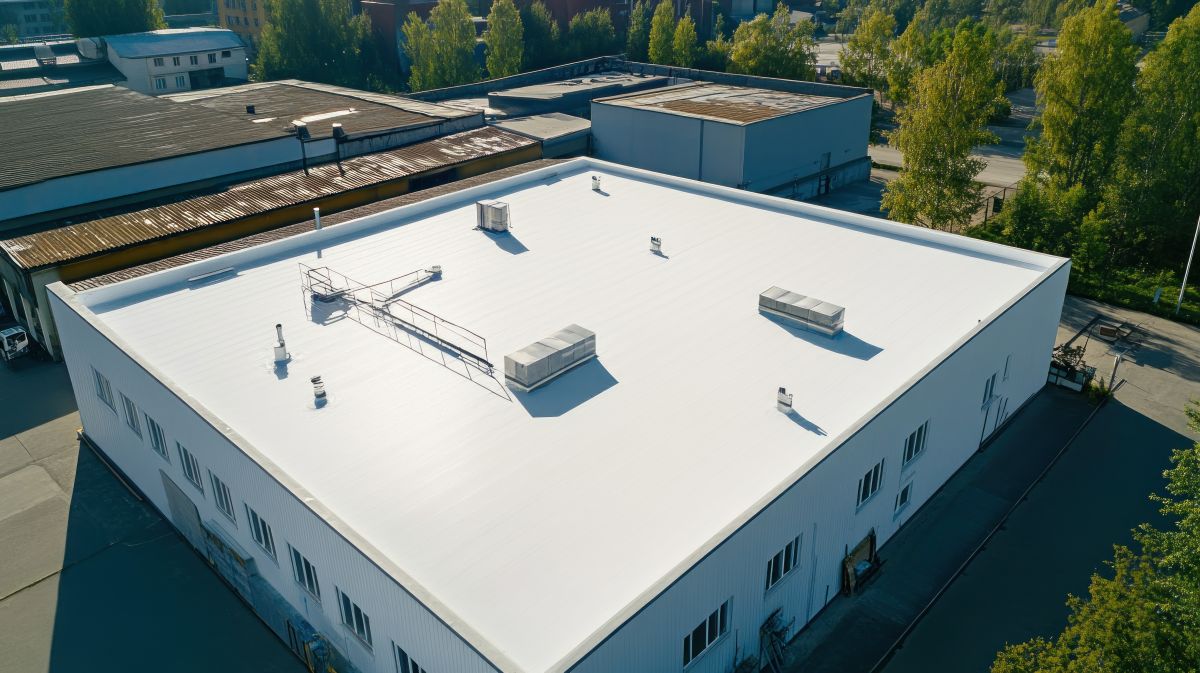
Flat Roofing Systems in Minneapolis: TPO, EPDM, and Modified Bitumen Compared
If your Minneapolis home has a flat or low-slope roof section — common on modern builds, additions, dormers, and many mid-century homes — your material options are completely different from a pitched asphalt roof. You’re looking at membrane systems: TPO, EPDM, or modified bitumen. Each has a different cost, lifespan, appearance, and climate fit, and none of them are interchangeable with shingles.
This is the practical breakdown for Minneapolis homeowners and light-commercial property owners. Three flat roofing systems in Minneapolis are standard in 2026 — TPO, EPDM, and modified bitumen — and this guide walks through when each is the right answer for your specific roof.
Flat roofing systems in Minneapolis: the three real options
Flat and low-slope roofs (pitch under 2:12) can’t use asphalt shingles because shingles need gravity-driven water flow to shed properly. Instead, flat roofs use continuous membrane systems that are fully sealed at the seams. The three systems dominating the 2026 Minneapolis market:
| System | Material description | MN installed cost / sq ft | Expected MN lifespan |
|---|---|---|---|
| TPO | White thermoplastic polyolefin membrane | $7.00 – $12.00 | 20–25 years |
| EPDM | Black synthetic rubber membrane | $6.00 – $10.00 | 25–30 years |
| Modified bitumen | Asphalt-based rolled membrane | $5.00 – $9.00 | 15–22 years |
TPO is the fastest-growing flat-roof material in Minneapolis and the default spec on most new low-slope commercial and residential work. EPDM has the longest residential track record and performs well in Minnesota’s freeze-thaw cycles. Modified bitumen is the budget option and still common on smaller residential repair jobs.
All three are real systems and can all perform well when installed by a qualified contractor. The installation is arguably more important than the material — a poorly-installed TPO roof will fail before a well-installed modified bitumen. For the full material landscape, see the Minneapolis roofing materials pillar.
TPO flat roofing in Minneapolis: the modern default
TPO (thermoplastic polyolefin) is a single-ply white membrane that’s become the default on new flat-roof installs in the Minneapolis metro. The reasons are practical:
- Reflectivity. White surface reflects heat and reduces cooling load. Particularly valuable on south-facing Minneapolis commercial buildings with flat roofs over conditioned space.
- Heat-welded seams. Seams are heat-welded rather than glued, creating a continuous membrane. This is the durability advantage: most flat-roof failures happen at seams, and TPO seams hold up.
- Cost. Mid-range — more expensive than modified bitumen, less than PVC or commercial-grade EPDM.
- Thickness options. 45-mil, 60-mil, and 80-mil membranes available. 60-mil is the residential standard; 80-mil for commercial or high-traffic applications.
- Warranty. 15–25 year manufacturer warranties standard from major manufacturers (GAF, Firestone / Holcim, Carlisle SynTec, Johns Manville).
- Installation complexity. Moderate. Heat-welding equipment and trained installers required. Most Minneapolis commercial roofing crews are qualified; fewer residential crews are.
Best fit: most new flat-roof installations in Minneapolis — commercial buildings, modern residential flat-roof sections, additions and dormers on mid-century homes, garage and shop roofs. For specific contractor selection, see the Minneapolis roofing companies pillar. For cost detail, the Minneapolis roof replacement cost pillar.
EPDM flat roofing in Minneapolis: the residential track record
EPDM (ethylene propylene diene monomer) is a black synthetic rubber membrane that’s been the residential flat-roof standard in the Midwest for 40+ years. It has the longest real-world performance track record in Minnesota climate:
- Material. Synthetic rubber membrane, typically 45-mil or 60-mil thick. Black surface, which absorbs heat (an advantage in winter, disadvantage in summer).
- Seaming. Seams are glued with tape or liquid adhesive rather than heat-welded. This is EPDM’s primary vulnerability — seam failures are the most common leak source over time.
- Fastening. Either fully adhered, mechanically fastened, or ballasted (river rock over membrane). Fully adhered is the residential standard in Minneapolis.
- Freeze-thaw performance. Excellent. Rubber membrane handles Minnesota’s temperature swings without cracking.
- Lifespan. 25–30 years typical, occasionally longer. Well-maintained EPDM roofs from the 1990s are still performing in 2026.
- Cost. Lower than TPO on average; more expensive than modified bitumen.
Best fit: residential flat-roof sections on mid-century Minneapolis homes, garage and shop roofs, low-pitch dormers and additions. EPDM is also the cost-effective choice when the existing roof is already EPDM and a full tear-off isn’t needed.
The TPO-versus-EPDM debate in Minneapolis flat roofing is less about which is better and more about which is better for this specific project. TPO wins when reflectivity and heat-welded seams matter (commercial, new residential, south-facing). EPDM wins when track record and lower cost matter (residential retrofit, older homes, budget-driven repairs). A good contractor will quote both when either could work.
— Paraphrased from a 2024 Single-Ply Roofing Industry (SPRI) technical briefing on flat-roof material selection
Modified bitumen in Minneapolis: the budget and repair option
Modified bitumen is an asphalt-based rolled membrane that’s the budget option for flat roofing in Minneapolis. It’s less common on new installs but still widely used for repairs and low-budget residential jobs:
- Material. Rolled membrane of asphalt modified with SBS (styrene-butadiene-styrene) or APP (atactic polypropylene) polymers. SBS is more flexible; APP is more UV-resistant.
- Application. Heat-welded (torch-applied), hot-mopped (asphalt), cold-applied adhesive, or self-adhering. Torch-down is most common in Minnesota but requires fire-watch protocols.
- Lifespan. 15–22 years typical. Shorter than TPO or EPDM but adequate for many applications.
- Cost. Lowest of the three main systems — often 20–30% less than TPO.
- Aesthetic. Available with granulated surface that matches older asphalt-based roof aesthetics. Good for historic or traditional homes with visible flat sections.
- Repair compatibility. Modified bitumen is easier to repair and patch than single-ply membranes. Good for properties that need regular maintenance.
Best fit: budget-driven flat-roof projects, repair and overlay work on existing asphalt-based flat roofs, historic homes where modern TPO doesn’t fit aesthetic, and smaller residential sections where a 15–20 year lifespan is acceptable. For storm and claim dynamics on flat-roof damage, see the Minneapolis storm damage claim pillar. For the metal alternative on low-slope, metal roofing types in Minneapolis. For decking considerations beneath any flat system, roof decking: OSB vs plywood in Minneapolis. Further reading: the Single-Ply Roofing Industry resource center, the Asphalt Roofing Manufacturers Association, and the NRCA consumer center.
Frequently Asked Questions
What’s the best flat roofing system for Minneapolis?
TPO is the default modern choice for new installs thanks to reflectivity and heat-welded seams. EPDM has the longest Minnesota track record and works well on residential flat-roof retrofits. Modified bitumen is the budget option for repairs and lower-end residential jobs. Scenario drives the selection more than any blanket winner.
How long do flat roofs last in Minneapolis?
TPO: 20–25 years. EPDM: 25–30 years. Modified bitumen: 15–22 years. All three depend heavily on installation quality — a poorly-installed premium TPO will fail before a well-installed modified bitumen. Warranty coverage typically runs 10–25 years on commercial and residential lines.
Can I put shingles on a flat roof in Minneapolis?
No, and contractors who try to are cutting corners. Asphalt shingles require a 2:12 or greater pitch to shed water properly. Flat and low-slope roofs (under 2:12) require membrane systems like TPO, EPDM, or modified bitumen. Shingles on a true flat roof will leak within 2–3 years regardless of brand or quality.
How much does a flat roof replacement cost in Minneapolis?
Installed costs in 2026: TPO $7–$12 per sq ft, EPDM $6–$10, modified bitumen $5–$9. On a typical 1,500 sq ft flat-roof residential or small commercial project, that’s $7,500–$18,000 depending on system choice, deck condition, and complexity. Commercial projects with scuppers, curbs, and penetrations run higher.
Which flat roof is best for a Minneapolis commercial building?
Almost always TPO in 2026. Heat-welded seams, reflective white surface for cooling-load reduction, strong manufacturer warranty options from GAF / Firestone-Holcim / Carlisle / Johns Manville, and broad contractor availability. EPDM is an acceptable alternative on simpler projects with lower budgets.
Looking for a Minneapolis flat roofer experienced in TPO and EPDM?
We’re Minneapolis Roofing Company — a licensed, insured, local crew that installs asphalt, metal, and synthetic systems across the Minneapolis metro. If you’re looking for a Minneapolis flat roofer experienced in TPO and EPDM, we’d love to be the name you recommend to your neighbor after the install.
