
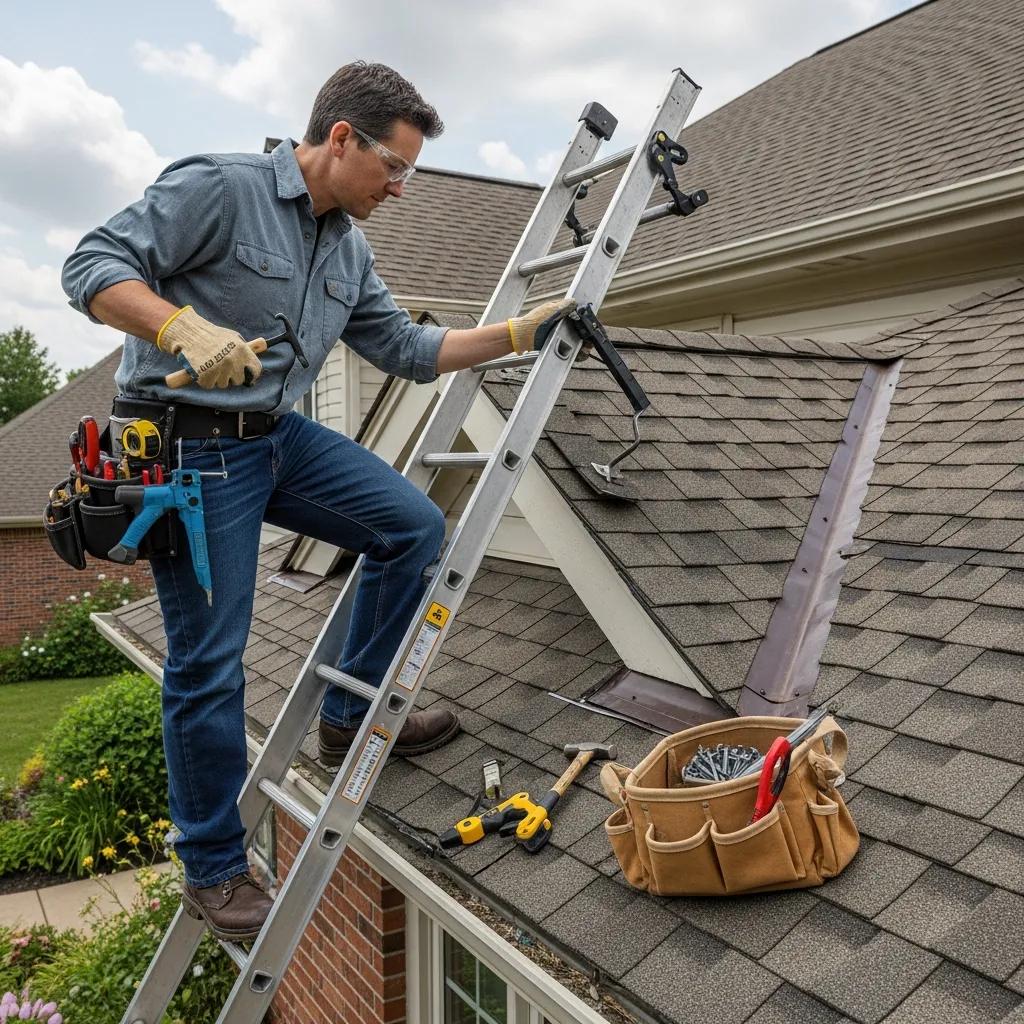
Chimney Leak Repair in Minneapolis: Why It’s Almost Never the Roof
When a Minneapolis homeowner calls with a leak near the chimney, there’s a coin flip whether they need a roofer or a mason. Chimneys leak in five distinct places, and only one of them is actually the roof. Getting this diagnosis right upfront saves a lot of money — and prevents the frustration of “we just had a new roof put on and the chimney still leaks.”
This is the practical guide to chimney leak repair in Minneapolis: the five places chimneys leak, how to tell which one you have, when to call a roofer vs. a mason, what proper repair looks like at each failure point, and what it costs in 2026.
The five places a Minneapolis chimney leaks (and how to tell them apart)
When water shows up inside the home near the chimney, one of five things is leaking:
- The chimney flashing at the roof line. This is the actually-roof failure point: step flashing and counter flashing where the chimney meets the shingles. Fix: roofer. See roof flashing repair in Minneapolis.
- The chimney crown (top horizontal concrete slab). Cracks in the crown let water soak into the masonry from above. Fix: mason or chimney specialist.
- The chimney cap (the metal topper that keeps rain and animals out of the flue). Missing, rusted, or damaged caps let water straight into the flue. Fix: chimney specialist or handyman.
- The brick and mortar itself. Freeze-thaw cycling in Minneapolis wrecks brick and mortar. Cracked bricks, deteriorated mortar joints, and spalling faces all absorb water. Fix: mason (tuckpointing or brick replacement).
- The chimney liner or chase pan (on manufactured chimneys). Newer homes often have metal chimneys in wood-framed chases with a metal “pan” at the top. These pans are notorious for leaking. Fix: chimney specialist.
Only #1 is a roofer’s job. The other four need a chimney specialist or mason. Roofers who tell you they’ll “fix your chimney leak” without identifying which of these five is failing are guessing. Identify the source first. For the broader leak diagnosis process, see roof leak repair in Minneapolis. For the overall landscape, the roof repair in Minneapolis pillar.
How to diagnose which chimney leak you actually have
Four tests you can do yourself (or your contractor should do) to isolate the source:
- Rain test, section by section. A garden hose run on different parts of the chimney for 15–20 minutes each, while someone watches for interior water entry, isolates the source. Start at the roof-chimney junction (flashing). If no leak, move to the lower brick field. If still dry, test the crown. Then the cap. This is slow but conclusive.
- Look at the crown from above. On a safe day, a view of the top of the chimney from a ladder tells you if the crown is cracked, the cap is missing, or the pan is obviously rusted. Most Minneapolis chimney leaks, when the crown or cap is the culprit, are visible from a 30-second look at the top.
- Check the mortar joints and brick faces. If mortar is crumbling, bricks are spalling, or vertical cracks are visible, water is coming through the masonry itself. Run a finger along mortar joints — if material flakes off, the joints are failed.
- Interior inspection during a heavy rain. Where exactly is the water appearing? Flashing leaks show up right at the ceiling line near the chimney. Masonry leaks show up lower, along the chimney shaft, sometimes in the basement. Crown leaks tend to be intermittent and worst after heavy prolonged rain.
If you’re hiring a contractor to diagnose, the diagnostic itself should take 30–60 minutes and cost $100–$350 depending on access and scope. A contractor who skips this and jumps straight to recommending a $3,000 repair without isolating the source is guessing. For contractor vetting, the Minneapolis roofing companies pillar.
Minneapolis chimney leak repair cost: 2026 by failure type
| Failure point | Who fixes it | 2026 typical cost (Minneapolis) |
|---|---|---|
| Chimney flashing — step & counter | Roofer | $600–$2,500 |
| Chimney crown (concrete cap) | Mason / chimney specialist | $400–$1,500 (repair) / $1,200–$3,500 (rebuild) |
| Chimney cap (metal topper) | Chimney specialist | $200–$800 installed |
| Brick & mortar (tuckpointing) | Mason | $15–$35 per square foot, typically $1,500–$6,000 for a full chimney |
| Brick replacement (major spalling) | Mason | $3,000–$10,000+ depending on scope |
| Chase pan replacement | Chimney specialist or sheet metal | $500–$2,000 |
| Full chimney rebuild above roofline | Mason | $5,000–$15,000+ |
The pricing gap between “fixed right” and “patched” on Minneapolis chimneys is dramatic. A $400 caulk-job will fail within 2–4 years. A $1,500 proper flashing repair or crown rebuild will hold for 20+. For bundling: if you’re already pulling permits for a roof replacement, that’s the cheapest time to address chimney issues — access, staging, and trade coordination are already paid for. See the Minneapolis roof replacement cost pillar. For cost context, roof repair cost in Minneapolis.
Roughly 60% of the chimney leaks we diagnose in the Minneapolis metro are misidentified at the outset. Homeowners call a roofer assuming a flashing problem. The roofer sees the flashing is fine and declines the job. Homeowners call another roofer. The second roofer replaces the flashing anyway — and the leak continues because the crown was cracked the whole time. The fix is five minutes of diagnostic before anyone pulls out a ladder.
— Paraphrased from a chimney safety service technician interview
Minnesota chimney realities: freeze-thaw, ice damming, and ventilation
Minneapolis chimneys fail faster than chimneys in milder climates for three specific reasons:
- Freeze-thaw cycles. Minneapolis sees 50+ freeze-thaw cycles per winter, each one prying at moisture trapped in porous brick. Over 20–30 years, that cycling wrecks unsealed brick and mortar. Brick sealing with a breathable siloxane sealer every 5–7 years is cheap prevention. Spalling (brick face flaking off) is the most common visible symptom.
- Ice damming against the chimney. The roof area on the uphill side of a chimney collects snow and often becomes an ice dam anchor point. Ice damming forces water up under flashing and into the chimney-roof junction. See ice dam damage repair in Minneapolis.
- Cold-climate moisture condensation inside unused chimneys. Homes with decommissioned chimneys (old boilers, fireplace removed) often still have the chimney in place. Unused chimneys in Minnesota develop internal condensation that saturates the liner, drips into the attic, and causes “leaks” that aren’t actually water intrusion from outside. Diagnosis here may call for closing the chimney off or adding ventilation.
The annual maintenance cycle for a Minneapolis masonry chimney: visual inspection every year, sealer reapplication every 5–7 years, flashing inspection every time the roof is inspected, crown check every 3–5 years. For the broader material context, the Minneapolis roofing materials pillar. For insurance-related chimney damage (lightning strike, wind event), the Minneapolis storm damage claim pillar. Further reading: Chimney Safety Institute of America, NRCA consumer center, and IBHS FORTIFIED standards.
Frequently Asked Questions
Why does my chimney leak even after getting new flashing installed?
Because flashing is only one of five places a chimney leaks. The other four — crown, cap, masonry, and chase pan — aren’t addressed by flashing work. If your chimney leaked before the new flashing and still leaks after, the actual source is one of the other four points. A proper diagnostic (hose test or detailed inspection) isolates which.
Should I call a roofer or a mason for my Minneapolis chimney leak?
Call a roofer first if the leak appears right at the ceiling line near the chimney during rain — that’s typically flashing. Call a mason or chimney specialist if the leak appears lower on the chimney shaft, in the basement, or during very heavy rains with no obvious flashing issue. A roofer should refuse your job and refer to a mason if the diagnosis points to masonry, not flashing.
How much does chimney leak repair cost in Minneapolis?
Typical 2026 Minneapolis costs: flashing repair $600–$2,500; crown repair $400–$1,500 (or $1,200–$3,500 for rebuild); cap replacement $200–$800; tuckpointing $15–$35 per square foot ($1,500–$6,000 typical full chimney); chase pan $500–$2,000. Full chimney rebuild above roofline runs $5,000–$15,000+.
How can I tell if my chimney crown is cracked?
The chimney crown is the horizontal concrete slab at the top. Cracks are typically visible from a ladder view of the chimney top — look for hairline cracks radiating from the flue opening, chunks of concrete missing, or crumbling at the edges. Cracked crowns let water soak straight into the masonry and cause leaks that appear to be “everywhere” around the chimney.
How often should I seal my Minneapolis chimney?
Breathable masonry sealer (siloxane-based) should be reapplied every 5–7 years on Minneapolis brick chimneys. The first sign the previous sealer has failed: water beads up on a freshly-wetted brick less than it used to, or spalling (brick face flaking) starts appearing. Sealing is a $300–$800 job that prevents thousands in future tuckpointing.
Looking for a Minneapolis contractor for chimney leak diagnosis and flashing repair?
We’re Minneapolis Roofing Company — a licensed, insured, local crew that handles everything from small leak repairs to full tear-offs across the Minneapolis metro. If you’re looking for a Minneapolis contractor for chimney leak diagnosis and flashing repair, we’d love to be the name you recommend to your neighbor after the work is done.
