
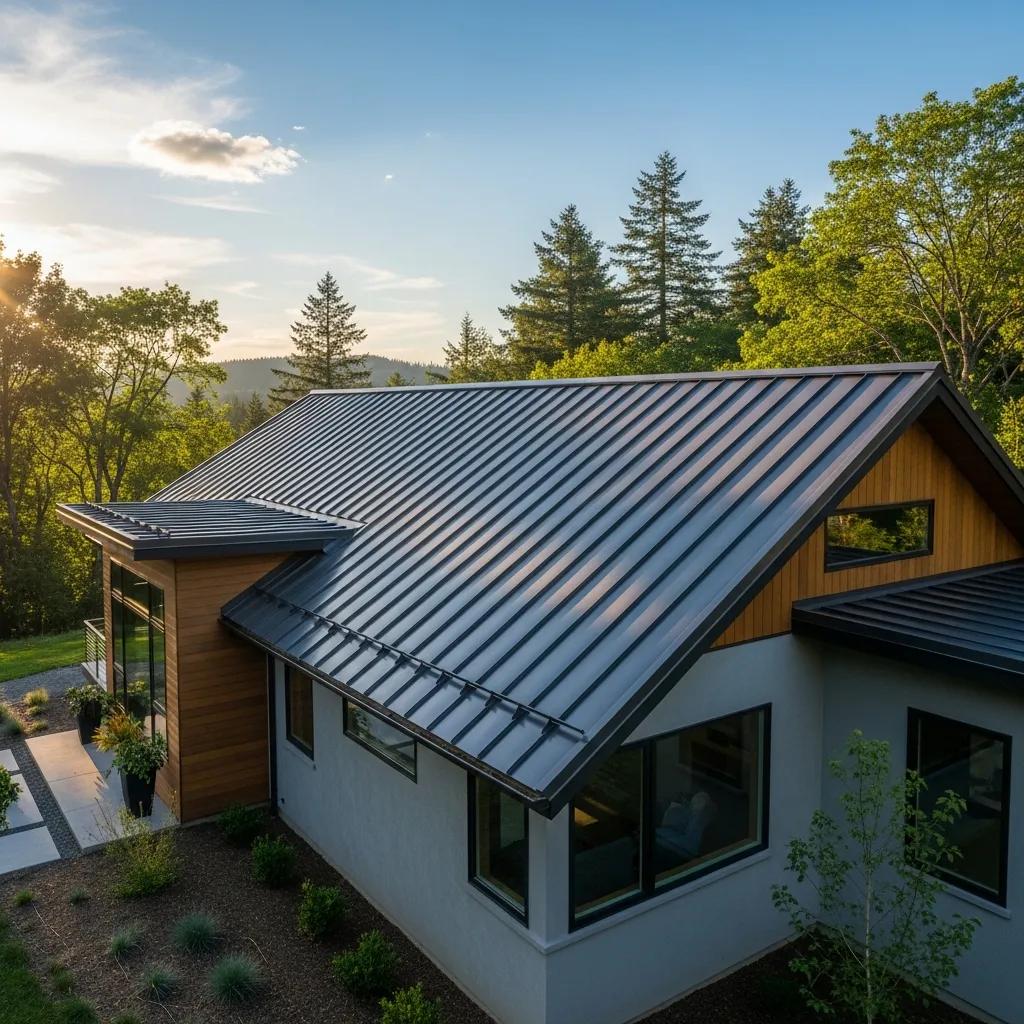
Metal Roofing Types in Minneapolis: Standing Seam, Stone-Coated, and Exposed Fastener Compared
Metal roofing is having a 20-year moment in the Minneapolis metro. Lake homes on Lake Minnetonka. Modern builds in Northeast. Cabin-style remodels in the exurbs. What’s driving the shift is the math: a well-installed metal roof in Minneapolis lasts 40–70 years, handles hail and ice dams better than asphalt, sheds snow effectively, and often lowers the lifetime cost per year despite the 2–3x higher upfront price.
But “metal roof” isn’t one product. It’s at least three distinct systems with different costs, aesthetics, and installation requirements. This guide walks through the three metal roofing types in Minneapolis homeowners actually see in 2026 — standing seam, stone-coated steel, and exposed fastener — and which scenario each one fits.
Metal roofing types in Minneapolis: the head-to-head
| Factor | Standing seam metal | Stone-coated steel | Exposed fastener (corrugated) |
|---|---|---|---|
| Typical MN installed cost / sq ft | $15.00 – $24.00 | $12.50 – $18.00 | $9.00 – $13.50 |
| Expected MN lifespan | 40–70 years | 40–50 years | 25–40 years |
| Hail resistance | Very good | Very good — Class 4 available | Good |
| Snow shedding | Excellent | Moderate (granules grip) | Excellent |
| Aesthetic style | Modern, clean vertical lines | Tile / shake / shingle mimic | Agricultural, cabin, commercial |
| Fastener exposure | Hidden (concealed clips) | Hidden (concealed clips) | Exposed screws with neoprene washers |
| Maintenance needs | Minimal | Moderate — granule loss | Higher — fastener inspection |
| Insurance discount eligibility | Often | Often, especially Class 4 lines | Variable |
| Typical MN customer | Lake homes, upscale residential | Architectural-style homes, hail belt | Barndominiums, garages, cabins, commercial |
The one-line summary: standing seam is the premium, stone-coated is the stylish middle, and exposed fastener is the utilitarian value option. All three are real metal roofs and will outlast any asphalt shingle. The right one depends on your aesthetic, your budget, and how the home is going to be used.
Standing seam metal roofing in Minneapolis: the premium option
Standing seam is what most Minneapolis homeowners picture when they hear “metal roof”: long vertical panels with raised interlocking seams, no exposed fasteners, clean lines. It’s the premium of the three systems and the most expensive to install:
- Material. 24-gauge or 26-gauge steel (most common in MN) or aluminum. Kynar 500 / PVDF factory-applied paint finish on premium lines; SMP (silicone-modified polyester) on budget lines.
- Panel width. 12” to 18” typical. Narrower panels = more seams = more premium feel and cost.
- Seam profile. Snap-lock (easier install, lower cost) or mechanical double-lock (watertight at shallow pitches, higher cost).
- Fastening. Hidden clips that allow the panel to expand and contract without stressing the fasteners. This is why standing seam handles Minnesota’s thermal cycling so well.
- Colors. Wide palette — classic reds, greens, blues, and grays; cool-roof colors with solar reflectance; custom colors from premium manufacturers.
- Installation complexity. High. Fewer Minneapolis contractors install standing seam well. The install is 60% of the outcome.
Best fit: Minneapolis lake homes, architectural custom builds, long-hold primary residences where the owner values appearance and plans to be in the house 20+ years. For upfront-cost math, see the Minneapolis roof replacement cost pillar.
Stone-coated steel roofing in Minneapolis: the design-focused middle
Stone-coated steel is a less-common but growing option in Minneapolis. It combines a metal substrate (durable) with a factory-applied mineral granule coating (looks like tile, shake, or shingle). The result is a roof that reads as traditional architectural style from the street while performing like metal:
- Substrate. 26-gauge galvanized or Galvalume steel.
- Granule coating. Ceramic-coated stone granules bonded with an acrylic overlay. Adds weight, visual texture, and UV protection.
- Profile options. Tile, shake, shingle, or diamond. Looks period-accurate on homes where a standing seam would feel out of place.
- Hail resistance. Many lines carry UL 2218 Class 4 rating and qualify for Minnesota insurance discounts.
- Installation. Concealed fasteners via interlocking panel system. Specialized installer training required.
- Maintenance. Granules can loosen over time; occasional cleaning or touch-up may be needed after 15–20 years.
Best fit: Minneapolis homes where the owner wants metal durability but the home’s architecture doesn’t suit standing seam — traditional craftsman, prairie-style, suburban two-stories, historic neighborhoods with HOA style guidelines. Popular in hail-belt ZIPs where Class 4 insurance discounts apply. For Class 4 detail, see impact-resistant Class 4 shingles in Minneapolis (same UL 2218 standard applies to metal lines).
Stone-coated steel is the answer when the homeowner wants a metal roof’s lifespan and hail performance, but standing seam would look wrong on the house. You get 40–50 years, Class 4 hail resistance, the aesthetic of tile or shake, and insurance discounts where available. It’s a genuine middle ground that fills a specific gap standing seam and architectural asphalt both miss.
— Paraphrased from a 2024 Metal Roofing Alliance consumer briefing
Exposed fastener metal roofing in Minneapolis: where it fits (and where it doesn’t)
Exposed fastener (corrugated or R-panel) metal is the most budget-friendly of the three systems and the most limited in residential application. It’s what you see on barndominiums, detached garages, cabins, sheds, and some commercial buildings — not typically on primary residences in Minneapolis:
- Material. 26-gauge or 29-gauge galvanized / Galvalume steel. Budget SMP paint finishes dominant.
- Panel style. Corrugated, R-panel, or PBR-panel profiles. Minimum 3:12 pitch recommended.
- Fastening. Exposed screws with neoprene washers through the panel face into the decking. This is the defining feature — and the primary failure mode over time.
- Lifespan. 25–40 years for the panels. Fastener washers usually require replacement at 15–25 years as the neoprene degrades.
- Maintenance. Regular fastener inspection. Failed washers cause leaks long before the panels themselves fail.
- Appearance. Utilitarian. Agricultural / industrial aesthetic. Works on cabins, barns, garages, detached structures.
Best fit: detached garages and outbuildings, cabin properties where utilitarian look fits the vibe, barndominiums, and shop-house hybrid builds. Generally not recommended for primary residences in Minneapolis unless the aesthetic specifically calls for it (modern cabin, renovated farmstead). For the broader materials context, see the Minneapolis roofing materials pillar. For the metal-vs-asphalt decision, metal roof vs. asphalt shingle in Minneapolis. For contractor selection, the Minneapolis roofing companies pillar. Further reading: the Metal Roofing Alliance consumer center, the Metal Building Manufacturers Association, and the NRCA consumer center.
Frequently Asked Questions
What’s the difference between standing seam and stone-coated metal roofing?
Standing seam has long vertical panels with raised seams and a modern clean look, typically used on lake homes, cabins, and architectural builds. Stone-coated steel has mineral granules bonded to a metal substrate and mimics tile, shake, or shingle, fitting traditional-style homes. Standing seam costs more; stone-coated offers more aesthetic versatility.
Are metal roofs a good fit for Minneapolis climate?
Yes, across all three types. Metal handles Minnesota’s thermal cycling, hail, and ice dams better than most alternatives. Standing seam and stone-coated sheds or grip snow appropriately; exposed fastener systems are fine for outbuildings. Metal roofs often qualify for Minnesota insurance discounts, especially Class 4 rated lines.
How long do metal roofs last in Minneapolis?
Standing seam metal: 40–70 years. Stone-coated steel: 40–50 years. Exposed fastener (corrugated): 25–40 years for panels, with fastener washers requiring replacement at 15–25 years. All three outlast any asphalt system when installed correctly.
Is metal roofing worth the upfront cost in Minneapolis?
For long-hold primary residences (20+ years) and lake homes, yes — the cost-per-year math often favors metal despite 2–3x higher upfront price. For short-hold properties, rentals, and flip-timeline residential, architectural asphalt usually wins on short-term economics. Scenario matters more than the material itself.
Can any Minneapolis roofer install metal roofing?
No. Metal roofing — especially standing seam — requires specialized installer training and equipment. Fewer Minneapolis contractors install metal well than install asphalt well. Before choosing metal, confirm your contractor shortlist includes qualified metal installers with portfolio examples and manufacturer certification.
Looking for a Minneapolis roofer certified in metal systems?
We’re Minneapolis Roofing Company — a licensed, insured, local crew that installs asphalt, metal, and synthetic systems across the Minneapolis metro. If you’re looking for a Minneapolis roofer certified in metal systems, we’d love to be the name you recommend to your neighbor after the install.
